The short answer
What matters most
- Acne may involve blocked pores, inflamed spots and deeper lesions; rosacea more often includes flushing, central redness and sensitivity.
- A long list of harsh active products can worsen irritation and make the picture harder to interpret.
- Scarring, severe acne, major distress, eye involvement and treatment resistance can change the referral pathway.
Why acne and rosacea can be confused
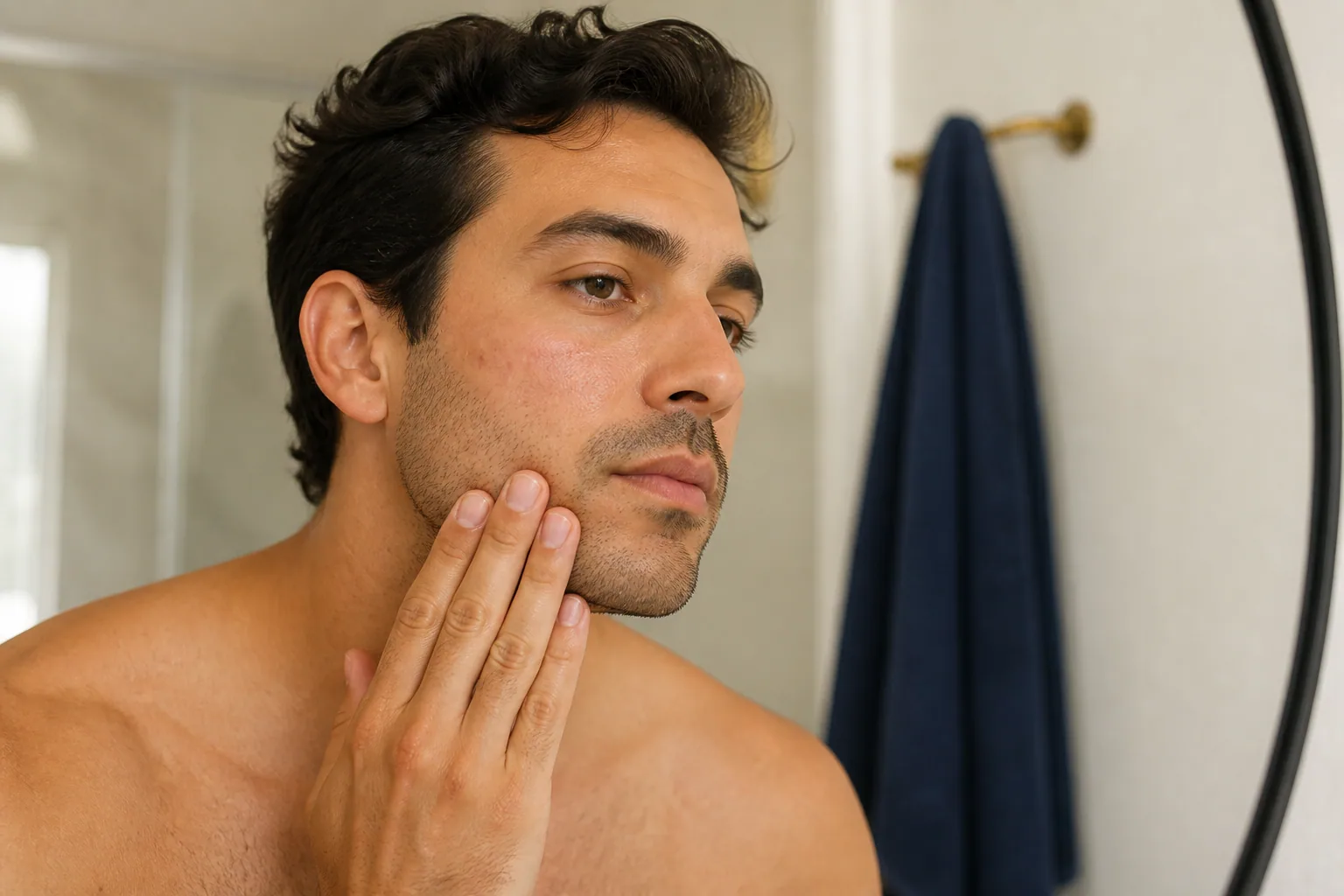
Both can create facial bumps and redness, but acne commonly includes comedones while rosacea often involves flushing, persistent central redness, visible vessels, burning or stinging. Contact dermatitis, perioral dermatitis and medicine-related reactions can also overlap in appearance.
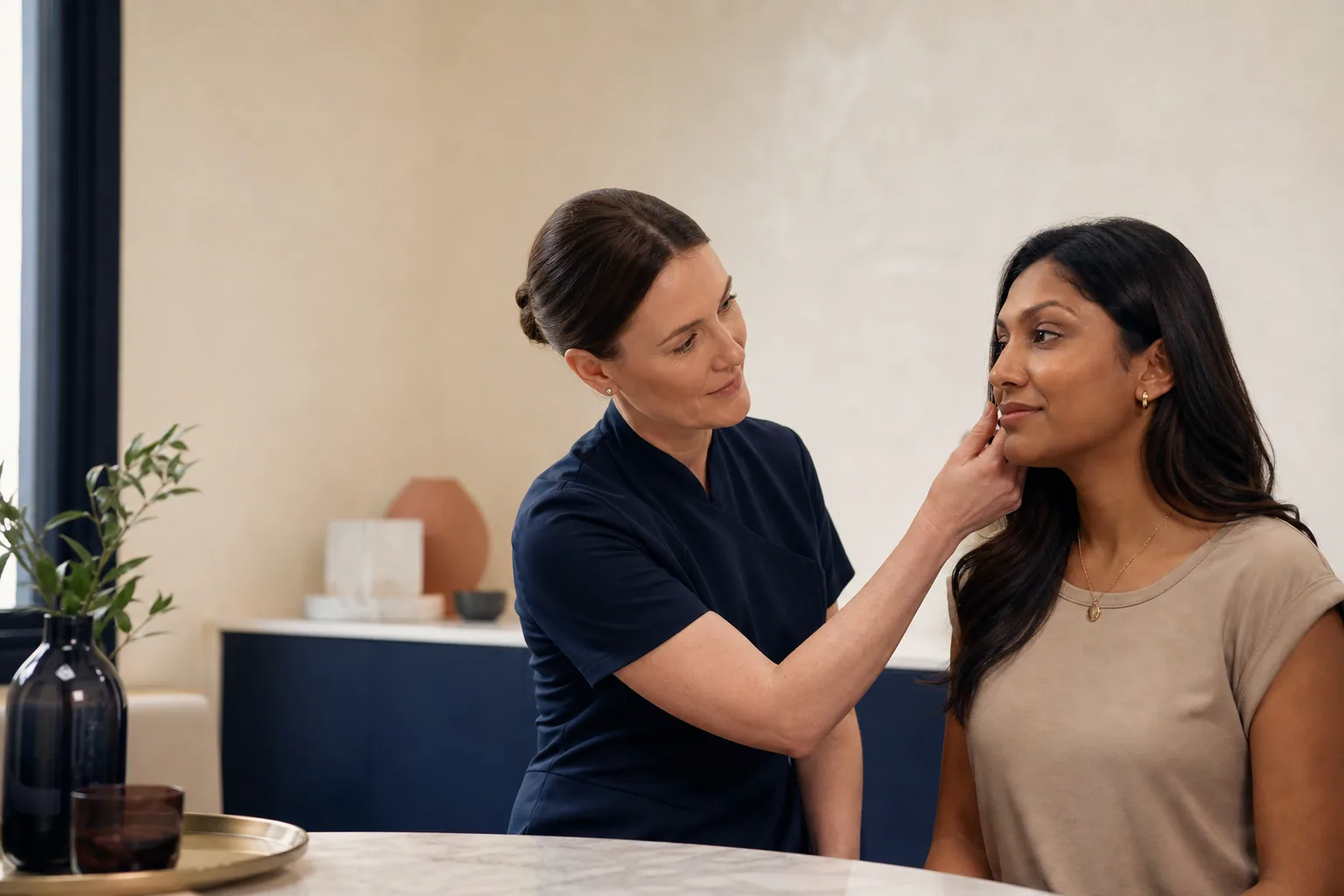
What to bring to the consultation
- A simple list or photographs of current skin-care products.
- Prescribed or over-the-counter treatments and how long each was used.
- Patterns involving heat, sunlight, alcohol, food, shaving, menstrual cycle or new products.
- Photographs taken during a flare in natural light.
- Details of eye irritation, scarring, pigmentation or mental-health impact.
A gentler routine is often easier to assess
Adding several acids, scrubs, retinoids and fragranced products at once can damage the skin barrier. A clinician may simplify the routine so one change can be assessed at a time. Daily sun protection is particularly important for rosacea and post-inflammatory pigmentation.
When referral may be appropriate
Severe inflammatory or nodulocystic acne, scarring, failure of appropriate treatment or substantial psychological distress may need specialist care. Rosacea that is severe, uncertain or resistant to treatment may also warrant referral. Painful red eye, light sensitivity or a change in vision needs urgent eye assessment.
Common questions
Frequently asked
Can rosacea look like acne?
Yes. Both can cause facial bumps and redness, but features such as comedones, flushing, visible vessels and sensitivity help distinguish them.
How quickly should acne treatment work?
Meaningful improvement usually takes weeks. NICE acne pathways use planned treatment courses and review rather than frequent short product changes.
Can rosacea be cured permanently?
Rosacea is long term. Treatment and trigger management can control symptoms, but a permanent cure should not be promised.
Sources checked
Authoritative UK guidance
Prepared by Pharmacillin for general education. Sources were checked on 26 August 2026. This article does not replace an individual medical assessment.