The short answer
What matters most
- Eczema, acne, mild psoriasis, scabies, fungal infections and several other common conditions often begin in community pharmacy or general practice.
- Severe or extensive disease, diagnostic uncertainty, complications, scarring and failure of appropriate treatment can justify specialist referral.
- Urgent symptoms should not wait for a routine skin appointment.
Why the right level of care matters
A dermatologist is a medical specialist in skin, hair and nail disease, but not every common rash needs secondary care. Community pharmacists and GPs routinely assess and manage many lower-risk skin problems, prescribe or recommend first-line treatment where appropriate, and recognise when a presentation needs escalation.
The useful question is not simply ‘Can this be treated?’ It is whether the diagnosis is reasonably clear, whether first-line care is safe, and whether severity or complications make another service more appropriate.
Conditions that often begin in community or primary care
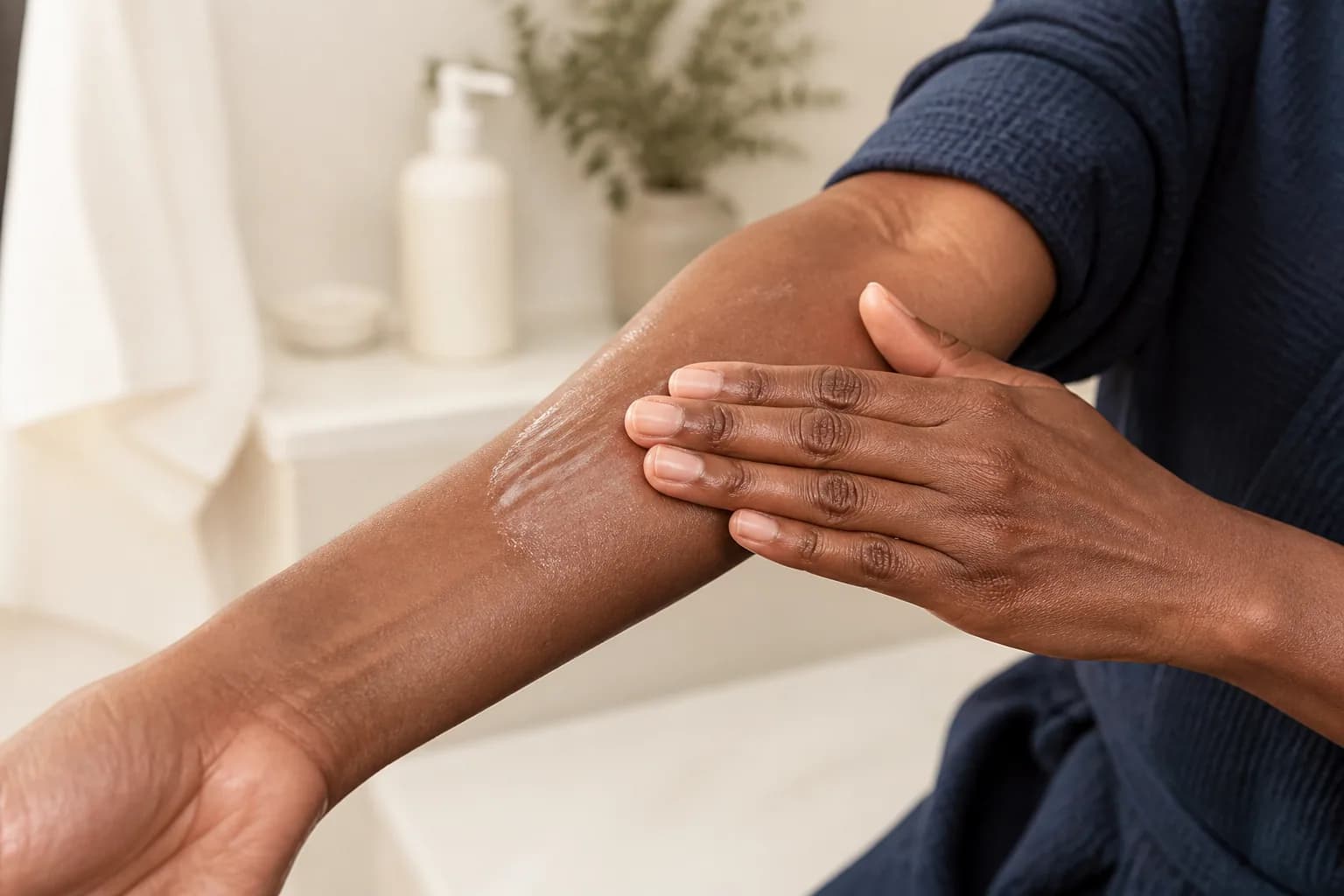
- Atopic eczema and contact dermatitis, with skin-barrier care and appropriate topical treatment.
- Mild to moderate acne and rosacea, with review over an adequate treatment period.
- Mild or limited psoriasis, while screening for major impact and joint symptoms.
- Scabies and ringworm, when the diagnosis is typical and treatment can be used safely.
- Impetigo, including eligible NHS Pharmacy First consultations in England.
- Short-lived urticaria and common warts or verrucae without concerning features.
When specialist referral may add value
Referral thresholds differ by condition, but recurring themes include diagnostic uncertainty, severe or extensive disease, failure of appropriate treatment, scarring, recurrent infection, major physical or psychological impact and the need for therapies available only in specialist care.
For psoriasis, NICE specifically identifies severe or extensive disease, poor control with topical treatment and major wellbeing impact among referral indications. For acne, scarring risk and treatment-resistant severe disease can change the plan.
When not to wait
Difficulty breathing, throat or tongue swelling, collapse, a rapidly spreading painful rash with systemic illness, severe eye symptoms, or a sudden serious reaction needs urgent or emergency care. A routine website enquiry is not monitored as an urgent clinical service.
What a Pharmacillin skin consultation does
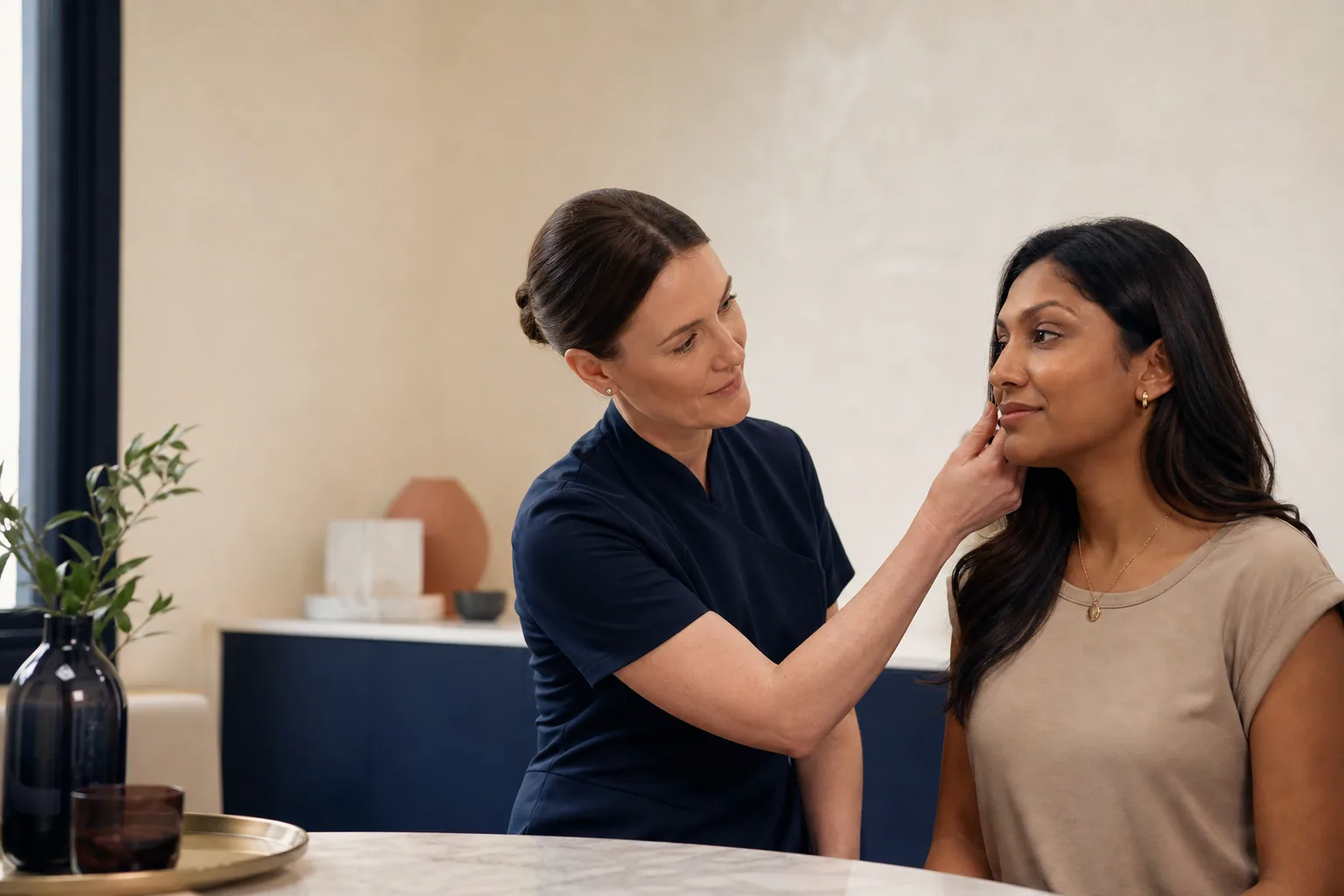
A Pharmacillin consultation at Letterbox or Belsize reviews the history, visible pattern, medicines and treatments already tried. The outcome may be self-care, a primary-care plan, planned review or onward referral. It is not a promise that every skin condition can be managed within the clinic.
Common questions
Frequently asked
Do I always need a dermatologist for eczema?
No. Eczema is commonly managed in primary care. Specialist advice is more likely to be useful when it is severe, difficult to control, recurrently infected or diagnostically uncertain.
Can a pharmacist assess a rash?
Pharmacists can assess many common skin presentations, recommend or supply treatment within their scope and direct people to a GP, urgent care or specialist pathway when appropriate.
Can a photograph diagnose my skin condition?
No. Photographs may support a history, especially for intermittent hives, but image appearance alone is not enough for every diagnosis or safety decision.
Sources checked
Authoritative UK guidance
Prepared by Pharmacillin for general education. Sources were checked on 26 August 2026. This article does not replace an individual medical assessment.