
The areas affected, flare pattern, nail or scalp changes and impact on daily life.
Dermatology
Psoriasis consultation
Mild or limited psoriasis is often managed in primary care. We review the extent of the skin changes, current topical care, possible joint symptoms and whether specialist assessment is indicated.

Assessment-led
Appointment30 min
ClinicsLetterbox + Belsize
StandardTriage + safety netting
What we cover
A clearer picture before any recommendation.
Treatments tried, how they were used, side effects and whether control has been adequate.
Joint pain or stiffness, uncertainty, extensive disease and reasons for dermatology referral.
Where this care sits
Start in the right place.
Usual care pathway
Usually begins in primary care. Refer for severe, extensive, difficult-to-control or diagnostically uncertain disease, and when psoriasis has a major wellbeing impact.
Do not wait for a routine appointment
Rapidly widespread redness, pus-filled bumps with systemic symptoms, or feeling acutely unwell requires urgent medical assessment.
The Pharmacillin view
The right plan starts with understanding what matters—and knowing when not to treat.
Images are illustrative and show the area or consultation experience. They are not patient outcomes or promises of a particular result.
Your consultation
Three considered steps.
An unrushed structure gives you the information and space needed to make an informed choice.
History
We map when the concern began, how it has changed, associated symptoms, triggers and treatments already tried.
Skin assessment
The presentation, distribution and relevant health factors are reviewed, including whether the diagnosis remains uncertain.
Right pathway
You leave with a clear primary-care plan, safety-net advice or onward referral when specialist assessment is more appropriate.
Important considerations
Suitability comes first.
- Psoriasis is not contagious and can affect mental health as well as skin.
- Recurring joint pain, stiffness or swelling should be discussed because psoriatic arthritis needs assessment.
- Some therapies are only available through specialist services and require monitoring.
After your appointment
Clear care beyond the clinic.
- Follow the written skin-care or medicine guidance agreed during the consultation.
- Know which changes mean you should seek earlier clinical review.
- Persistent, worsening or uncertain symptoms are escalated to the appropriate service.
Checked against UK guidance
Read the authoritative source.
This page supports a consultation; it cannot diagnose a rash or replace individual medical advice. Guidance can change, so the source page is the best place to check the latest version.
Continue exploring
Related dermatology services.
 01 · Dermatology
Eczema (atopic eczema)
Read service guide 03 · Dermatology
Acne vulgaris
Read service guide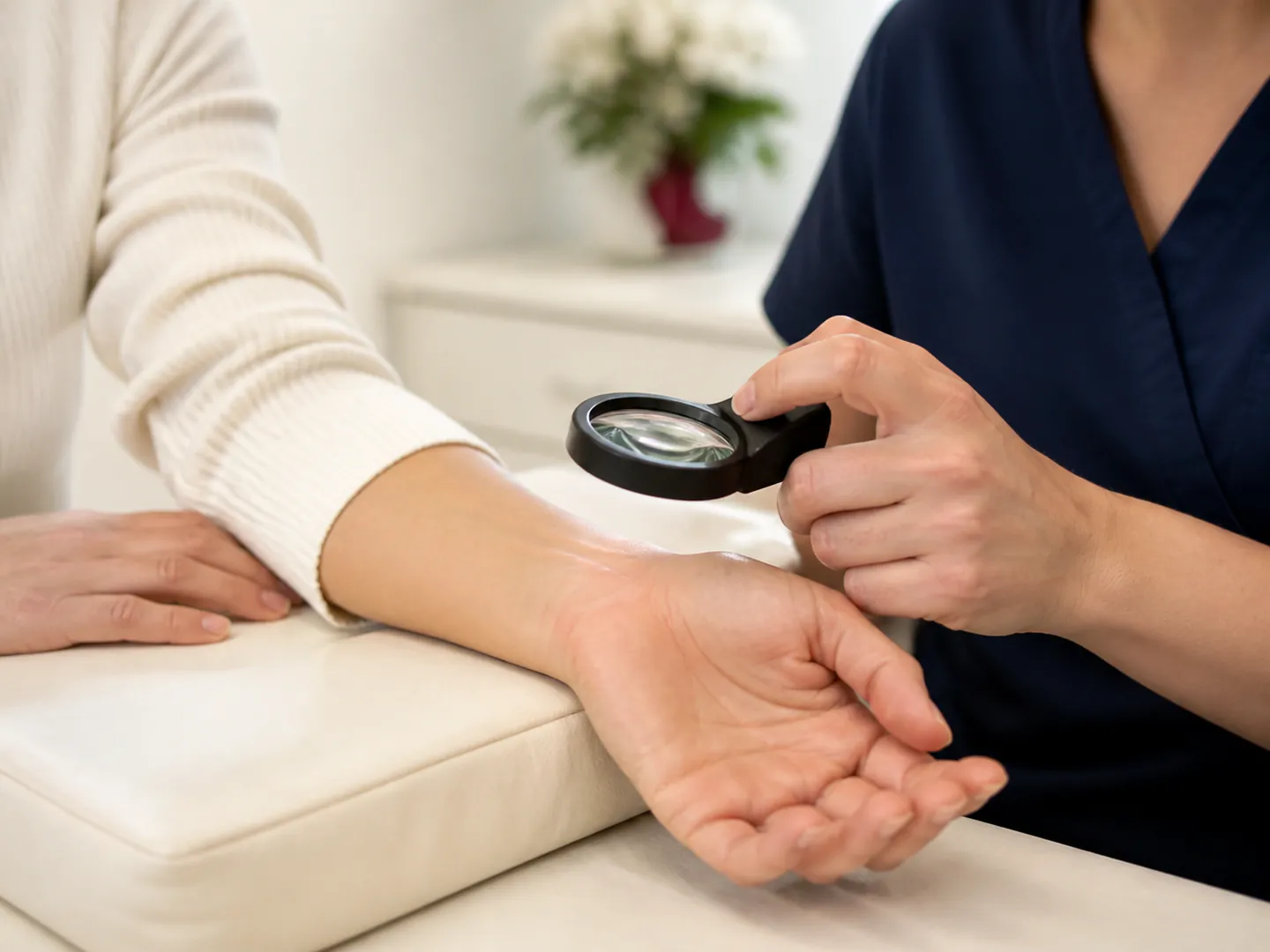 04 · Dermatology
Scabies
Read service guideHelpful reading
Understand the questions behind the consultation.

Dermatology pathways
Which skin-care pathway is right?
Many common skin concerns begin in community or primary care. Severity, uncertainty, complications and treatment failure are what usually change the pathway.
Read article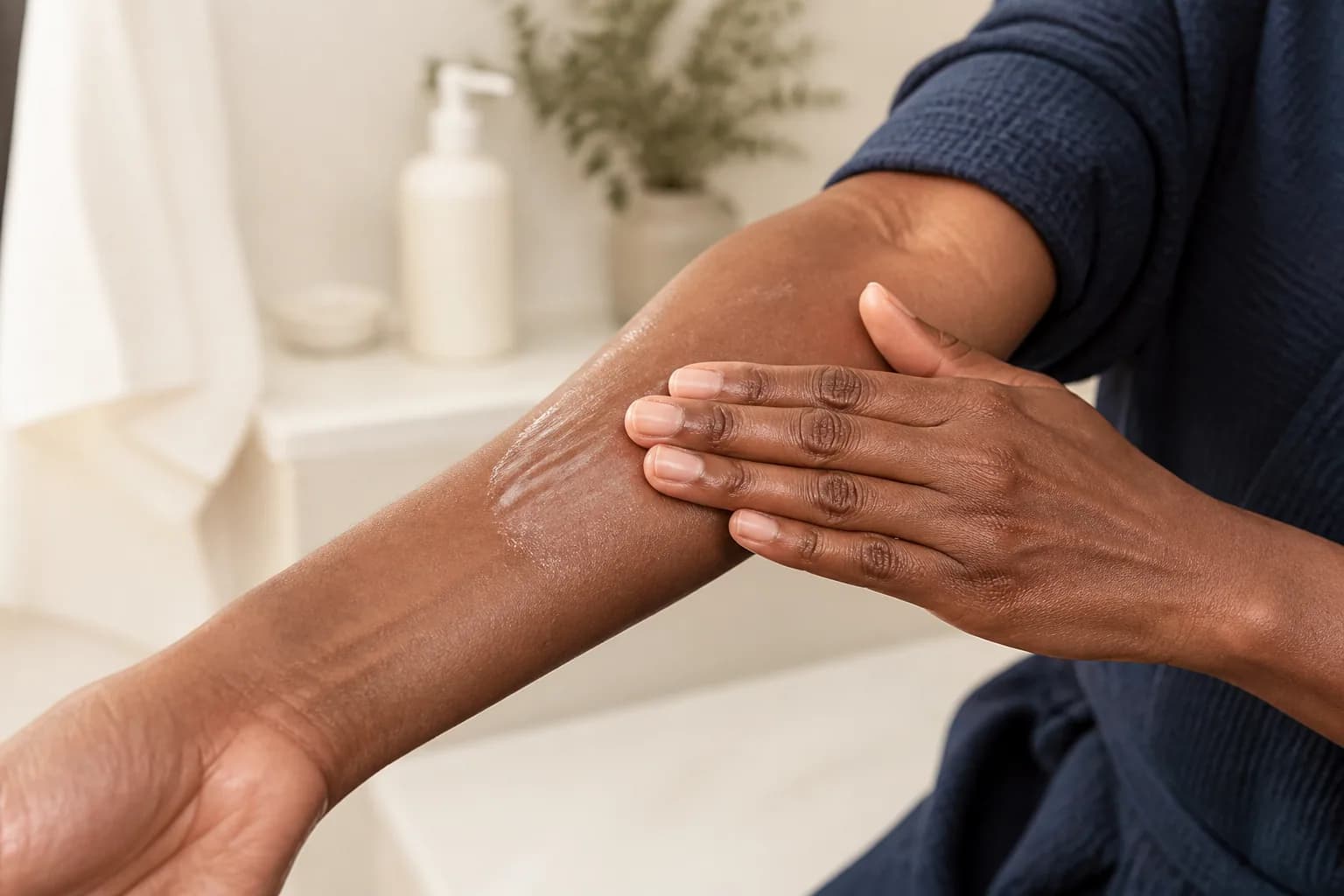
Inflammatory skin
What an eczema or psoriasis review should clarify
Both conditions can involve dry, itchy or scaly skin, but their patterns, complications and treatment pathways are not interchangeable.
Read articleYour next step
Begin with a proper conversation.
Request this consultation at Letterbox or Belsize. The exact location and appointment details will be confirmed with you.