The short answer
What matters most
- The exact device, skin tone, hair characteristics and treatment area affect the plan.
- Recent tanning, medicines and previous healing problems should be discussed.
- Ask about the proposed course and possible maintenance without assuming permanent removal of every hair.
Clarify the service before booking a course
A listing for laser treatments can cover different technologies and goals. Ask whether the specific hair-removal service, body area and device you are considering are available. Pharmacillin's directory lists laser treatments, but this article does not establish the exact machine or every treatment area offered.
Start with why you want to change your hair-removal routine: convenience, irritation from another method or a particular area that concerns you. If the skin has an active rash or another unassessed problem, mention that before an elective procedure is planned.
Ask about skin and hair assessment
The American Academy of Dermatology explains that hair colour, coarseness, location and skin characteristics influence laser hair-removal planning. Ask how the proposed technology fits your own skin and hair, and what experience the practitioner has with comparable skin tones.
Do not assume that a device described as advanced is suitable for every person. Equally, do not assume a darker skin tone automatically rules treatment out. The useful discussion is the practitioner's assessment, the available technology and the expected benefits and risks for your proposed area.
Further reading: American Academy of Dermatology: Preparing for laser hair removal
Bring medicines, tanning and treatment history
AAD preparation guidance recommends discussing recent tanning, medicines, a tendency to scar and relevant previous skin problems. Bring names and dates so the practitioner can assess the information accurately. Include non-prescription products and previous hair-removal procedures, not just current prescriptions.
Ask whether any preparation or delay is needed and why. Do not discontinue prescribed medicines to meet an appointment date without medical advice. If there is a preparation plan, write it down and ask whom to contact if your circumstances change before the session.
Further reading: American Academy of Dermatology: Preparing for laser hair removal
Understand testing, protection and adverse effects
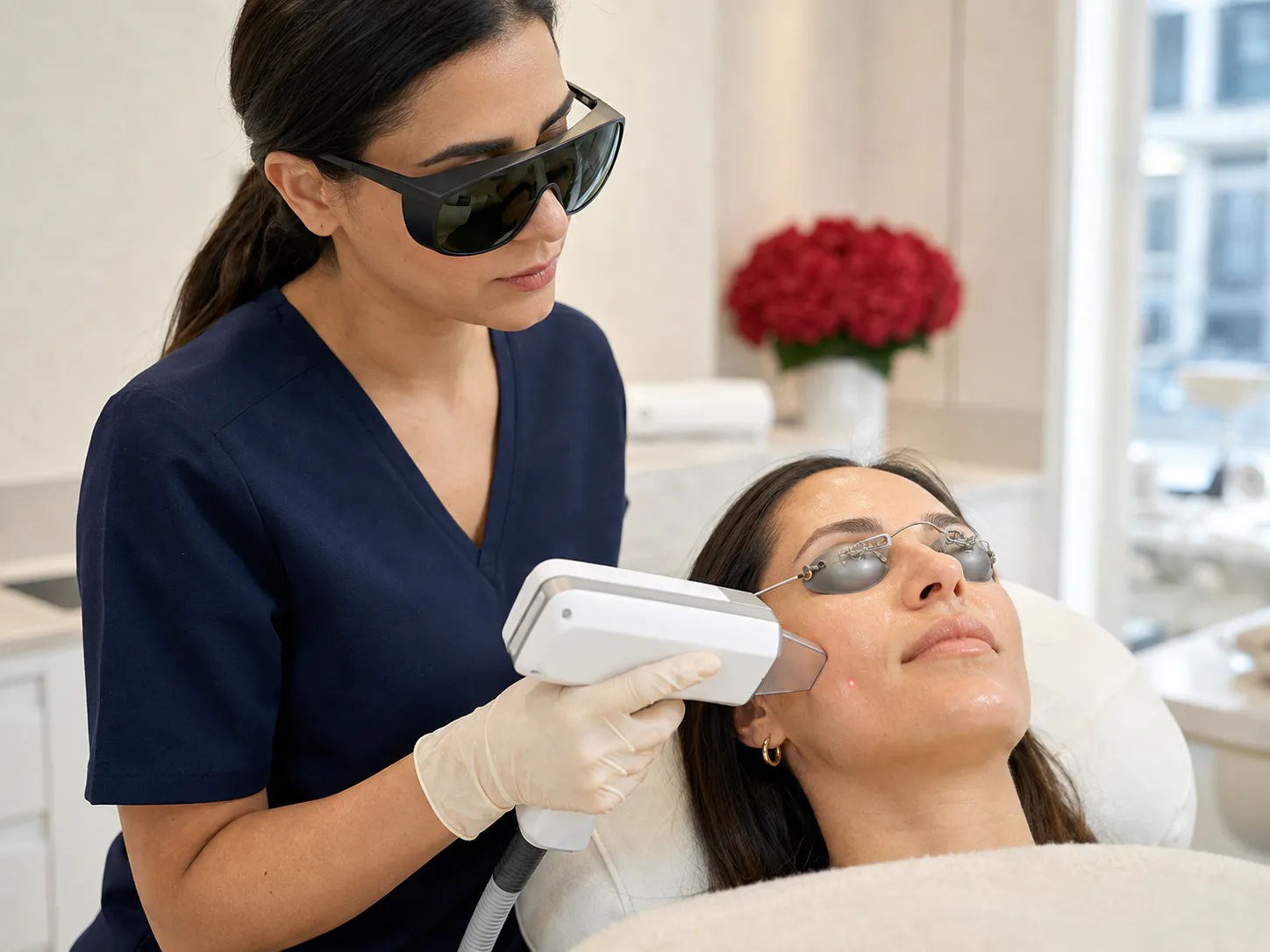
Ask whether the proposed service requires a test patch, how it is assessed and what it can and cannot establish. Do not treat a test as a guarantee that the full procedure will have no adverse effects. Confirm the protective eyewear and practical safety arrangements for the treatment.
AAD guidance describes risks including burns, scarring and lasting pigment changes, particularly with inappropriate treatment. Ask what reactions are expected, what would be concerning and how complications are handled. The practitioner should explain those risks for your circumstances rather than simply calling the procedure safe.
Further reading: American Academy of Dermatology: Laser hair removal: frequently asked questions
Prepare the area according to the actual plan
Ask for precise instructions about hair-removal methods, skin products, sun exposure and what to do on the day. Different providers or devices can have specific requirements. A generic online shaving schedule should not override the instructions for the procedure being offered.
Tell the practitioner if instructions are unclear or difficult to follow. For example, outdoor work or upcoming travel can affect planning. Arriving with a new tan, an irritated area or an undisclosed product change may alter the assessment, so make contact rather than hoping it will not matter.
Compare courses using realistic milestones
Laser hair removal commonly involves multiple sessions, and regrowth or maintenance can occur. AAD guidance explains that the outcome varies. Ask what reduction is realistic for your proposed area, how response will be assessed and what factors may change the initial course plan.
Pharmacillin's laser menu lists hair removal for small, medium and large areas at guide prices of £40, £70 and £100. Confirm how your proposed area is classified and whether the quote is per session. Compare the complete course cost and ask whether test patches, reviews or maintenance are separate; the menu does not guarantee a session count.
Further reading: American Academy of Dermatology: Laser hair removal: frequently asked questions
Keep the aftercare and review route accessible
Before treatment, ask what to do if the area feels more uncomfortable than expected or if new skin changes appear. Confirm who is contactable and which symptoms need urgent assessment. A clear route for concerns is part of deciding on a provider, not an optional detail after the procedure.
Laser treatment sits within Pharmacillin's aesthetics pathway; cuts, colour and braiding sit within Hair Services. Use the right guide for your concern and confirm the appointment location and availability. The local website planner helps organise your selection but does not book or send a clinical enquiry.
Common questions
Frequently asked
Will every hair be permanently removed?
Do not assume complete permanent removal. Response and regrowth vary with the area, hair characteristics and other individual factors. Ask about realistic reduction, how it is reviewed and whether maintenance may be needed.
Can laser hair removal be considered for darker skin?
Suitability depends on the person, technology and practitioner assessment. Ask about experience with your skin tone, device choice and pigment risks. This website cannot determine suitability or confirm a particular device from your skin tone alone.
Does a patch test guarantee no reaction?
No. Ask what the proposed test assesses, when it is reviewed and what changes would require reassessment. Tell the practitioner about any reaction and follow the instructions for the specific service rather than treating a test as blanket clearance.
Sources checked
Sources and further reading
Prepared by Pharmacillin for general education. Sources were checked on 6 October 2026. This article does not replace an individual medical assessment.