The short answer
What matters most
- Irritation and allergy are different mechanisms, even when the rash looks similar.
- Product names, ingredients, work exposure and timing help the assessment.
- Specialist diagnostic patch testing is different from pre-colour salon testing.
What contact dermatitis means
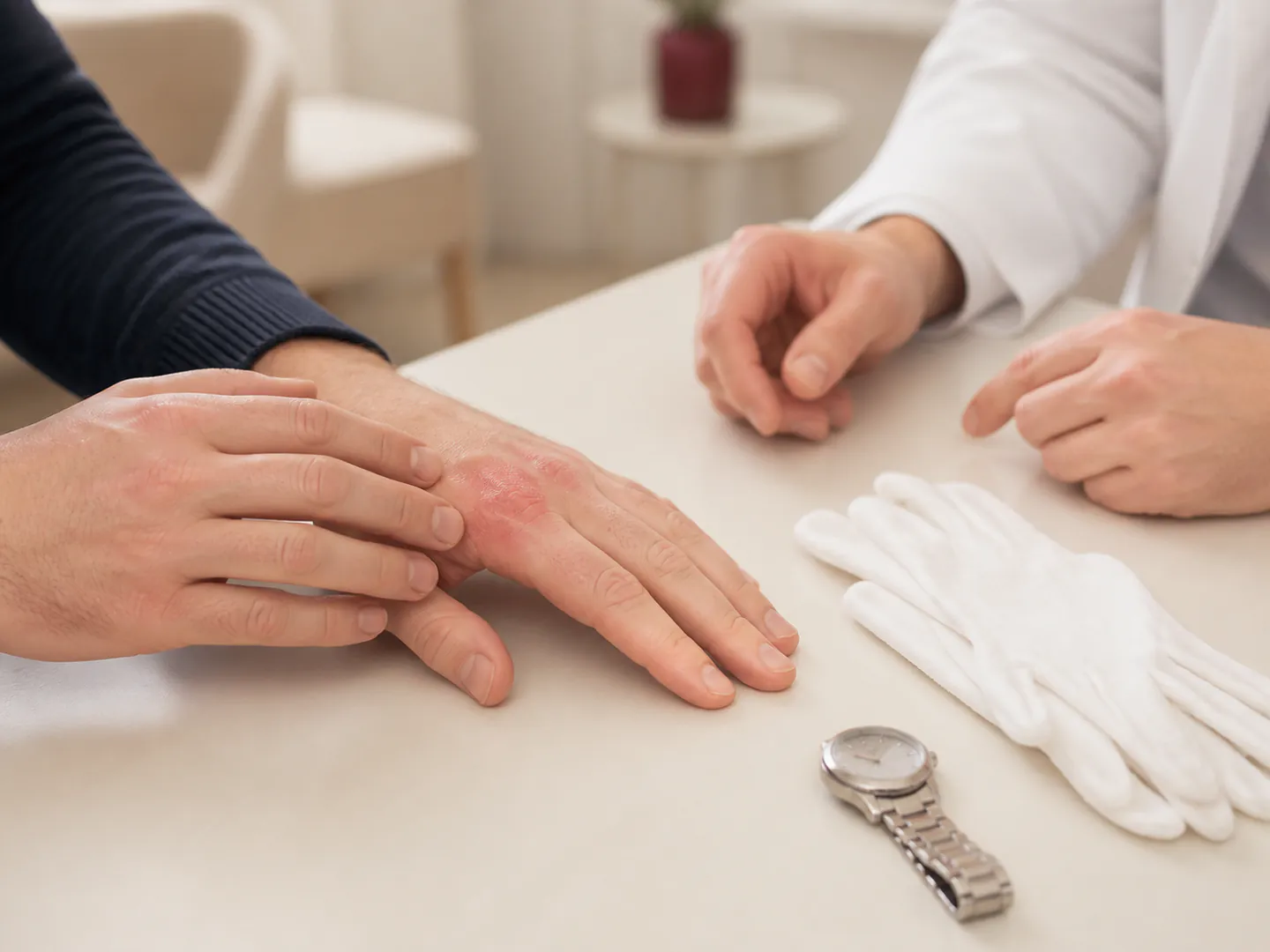
Contact dermatitis is skin inflammation associated with contact with a substance. An irritant can damage the skin barrier; allergic contact dermatitis involves an immune reaction to a substance. NHS guidance describes both types. A label such as 'hypoallergenic' on a product cannot determine which mechanism, if any, is affecting you.
Do not assume the newest product must be the only explanation. Consider everything touching the area, including hair products, gloves, cleaning products, jewellery and workplace materials. The consultation is an opportunity to assess this pattern, rather than to build a long list of products you are permanently afraid to use.
Further reading: NHS: Contact dermatitis · British Association of Dermatologists: Contact dermatitis patient information
Create an exposure diary you can share
Note the first symptom date, affected areas, products used and how quickly a reaction appeared. For hair-related symptoms, include colour, smoothing treatments, extensions, adhesives and scalp products. For hand symptoms, include washing frequency and work tasks. Save ingredient lists if you suspect a particular product.
A short diary can show whether the problem changes on days away from work or after an appointment. Keep the observations factual. Do not deliberately reapply a suspected allergen to prove the connection, and do not rely on a social-media elimination challenge as a substitute for assessment.
Look beyond the bathroom shelf
The British Association of Dermatologists highlights contact dermatitis in occupations involving wet work and repeated exposure, including hairdressing and healthcare. Tell the assessor what your hands or face encounter during a shift, what protective equipment is used and whether workplace products have changed.
Ask whether you should involve an occupational health service or your usual clinician. A useful plan should acknowledge what you can realistically avoid, what work requires and what needs further investigation. Bringing a safety data sheet or product name can be more helpful than describing a workplace liquid by its colour.
Further reading: British Association of Dermatologists: Contact dermatitis patient information
Understand what patch testing can and cannot do
Specialist diagnostic patch testing investigates possible contact allergens and involves planned applications and readings. NHS contact dermatitis diagnosis guidance explains that referral may be appropriate when an allergen is suspected. It is not the same service as a quick salon allergy alert test before colouring.
Ask what question a test is intended to answer, who performs it and how results will change your routine. The Pharmacillin service directory does not establish that specialist patch testing is available on site. If it is needed, ask about the appropriate referral pathway rather than assuming it is included in a standard consultation.
Further reading: NHS: Diagnosing contact dermatitis
Bring previous routines and reactions to the assessment
Describe the steps taken since symptoms started, including products stopped, products added and any prescribed medicines. If you simplified your routine, explain what remained. Take photographs of packaging and dated skin changes so you do not have to reconstruct several weeks of trial and error from memory.
Mention previous hair dye reactions separately. NHS hair dye advice explains that some reactions relate to ingredients such as PPD and advises following product testing instructions. Tell a stylist about prior reactions before booking colour. A negative test does not justify ignoring a reaction during an actual treatment.
Further reading: NHS: Hair dye reactions
Separate routine discomfort from urgent symptoms
If symptoms are persistent, recurrent or severe, arrange medical assessment. NHS contact dermatitis advice also highlights the need for help with possible infection. A rash that is spreading quickly, increasingly painful or accompanied by feeling unwell should not wait for an elective hair or aesthetic appointment.
Call 999 for breathing difficulty or swelling of the tongue or throat. For a less immediately dangerous but concerning reaction, seek prompt clinical advice. Keep the product details available and tell the service what happened. Do not try a stronger cosmetic product to counteract a reaction.
Further reading: NHS: Contact dermatitis · NHS: Hair dye reactions
Build a usable follow-up plan
Ask for a clear explanation of the suspected cause, what remains uncertain and what the next review is intended to establish. If several exposures are plausible, discuss how to keep a manageable record. The aim is a routine you can understand, with a route back for reassessment if symptoms continue.
This is one area where Pharmacillin's three service areas connect. A skin concern may need dermatology assessment before colour, styling or aesthetics is considered. Use the contact dermatitis service guide to prepare your questions, and tell the relevant practitioner about the concern before an appointment is confirmed.
Common questions
Frequently asked
Does 'natural' mean a product cannot cause a reaction?
No. Marketing language does not establish individual tolerability. Bring the ingredient list and the timeline of symptoms to an assessment. Avoid repeatedly testing a suspected cause on inflamed skin to see whether it happens again.
Is a salon allergy alert test a diagnostic allergy test?
No. It follows instructions for a particular colour product and service. Specialist diagnostic patch testing investigates suspected contact allergens through a clinical pathway. Neither should be substituted for the other.
Can I proceed with hair colour if my scalp is inflamed?
Tell the stylist before booking and seek appropriate assessment of the symptoms. The service may need to be postponed. Do not conceal a rash, use a different brand without advice or assume previous successful colour guarantees suitability now.
Sources checked
Sources and further reading
Prepared by Pharmacillin for general education. Sources were checked on 6 October 2026. This article does not replace an individual medical assessment.